Platform
How each capability works, what it replaces, and what it is measured against. For the short version, see the homepage.
That is the economics of infrastructure: each surface below reuses embeddings you have already paid to compute. Add a capability, not a vendor.
A multimodal foundation model trained on fashion's visual and commercial language — the layer the whole platform reasons on. Already state of the art on retrieval benchmarks against Marqo SigLIP and Google SigLIP2.
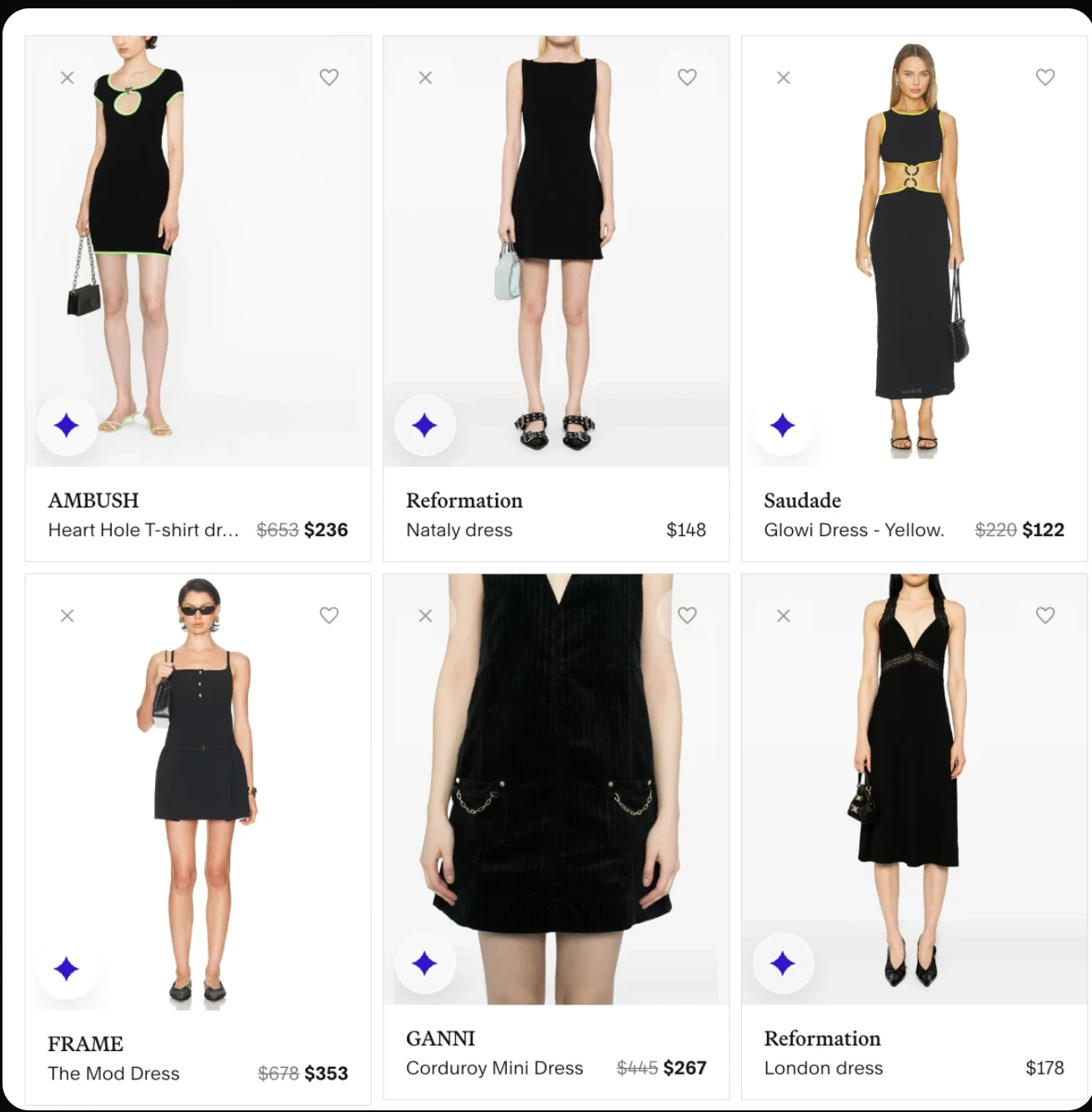
Multimodal retrieval that reads intent — not keywords. Live on customer sites.
↗ IIA catalog that enriches itself — SEO-ready, AEO-ready, agent-ready.
↗ IIIA canonical schema that makes fashion data legible to LLMs and downstream agents.
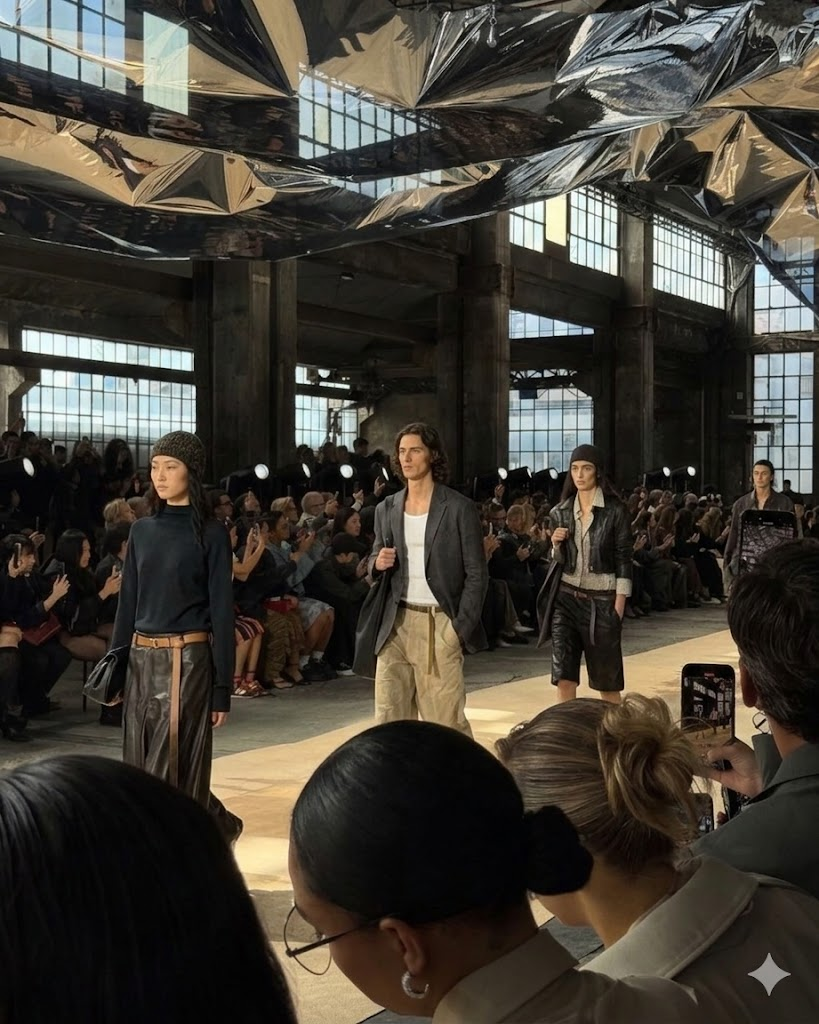
↗ IVEvery trend scored, ranked and tied to the runway–social lineage behind it.
↗ VAsk the engine where your assortment is thin and where the opportunity lies.
↗ VICity- and cohort-level trend signal — Mumbai's blokecore isn't Milan's.
↗Multimodal retrieval that understands aesthetic, occasion and context. Open-source SOTA embeddings, plus a closed harness on top. Measured at full corpus against FashionSigLIP, SigLIP-SO400M and ZooClaw: rank 1 or 2 on 9 of 10 benchmark cells, +6.9% mean over MODA on the six academic sets.
Every SKU becomes an agent-friendly record — full attribute grammar, occasion tags, silhouette detail, visual keywords, and reasoning for why it will convert. Built for shoppers, search engines and downstream agents at once.
Trained on twenty million e-commerce product images to learn what actually converts — for which aesthetic, on which surface, to which buyer.
What's rising, peaking, fading — stamped onto every SKU from Trend Lineage.
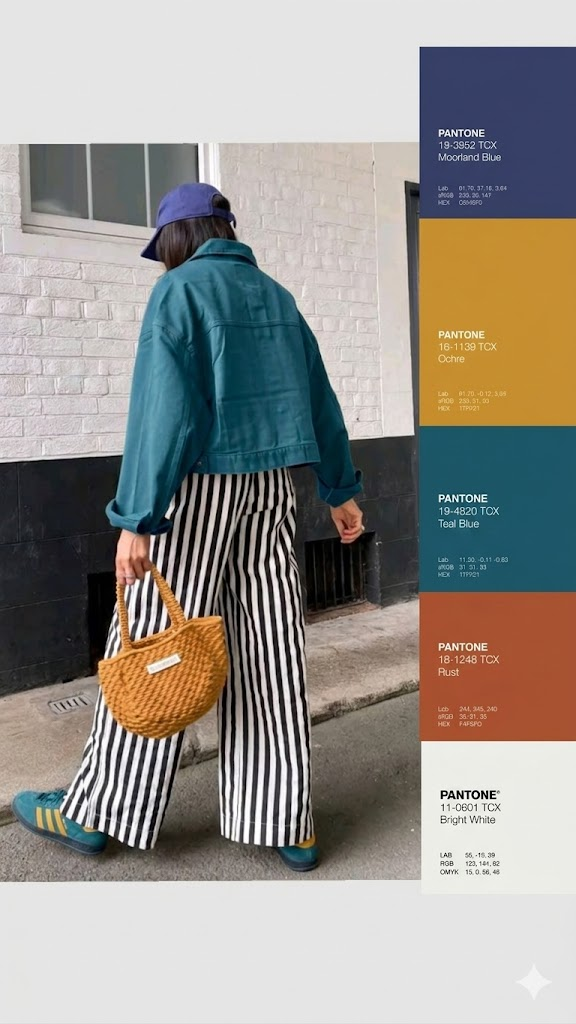
Crop, composition, palette, styling — scored against what converts for this aesthetic.
Copy, tone, keyword — matched to the language that gets a buyer to checkout.
"Breezy linen cami with sculpted shell cups and a peplum flare — made for warm days, balmy nights, and effortless getaways."
Under every product and trend is a canonical schema — silhouette, occasion, fabric, palette, cohort, price, lineage. It is what turns a messy catalog into structured intelligence that shopping agents, AI search engines and downstream models can act on.
// A single SKU as agent-consumable structured intelligence { "sku_id": "LNN-CAMI-01", "name": "Off-White Linen Shell Peplum Cami Blouse", "silhouette": { "family": "top/blouse", "shape": "fitted-bodice", "neckline": "sweetheart", "strap": "spaghetti" }, "fabric": { "material": "linen", "drape": "crisp" }, "palette": { "family": "neutral", "tone": "off-white" }, "occasion": ["resort", "brunch", "day-out"], "trend_lineage": { "parent_macro": "Neo-Victorian Romanticism", "cluster": "Organza Floral Applique", "call": "strong-buy", "score": 62 }, "cohorts": ["clean-girl", "quiet-luxury"], "price_band": "mid" }
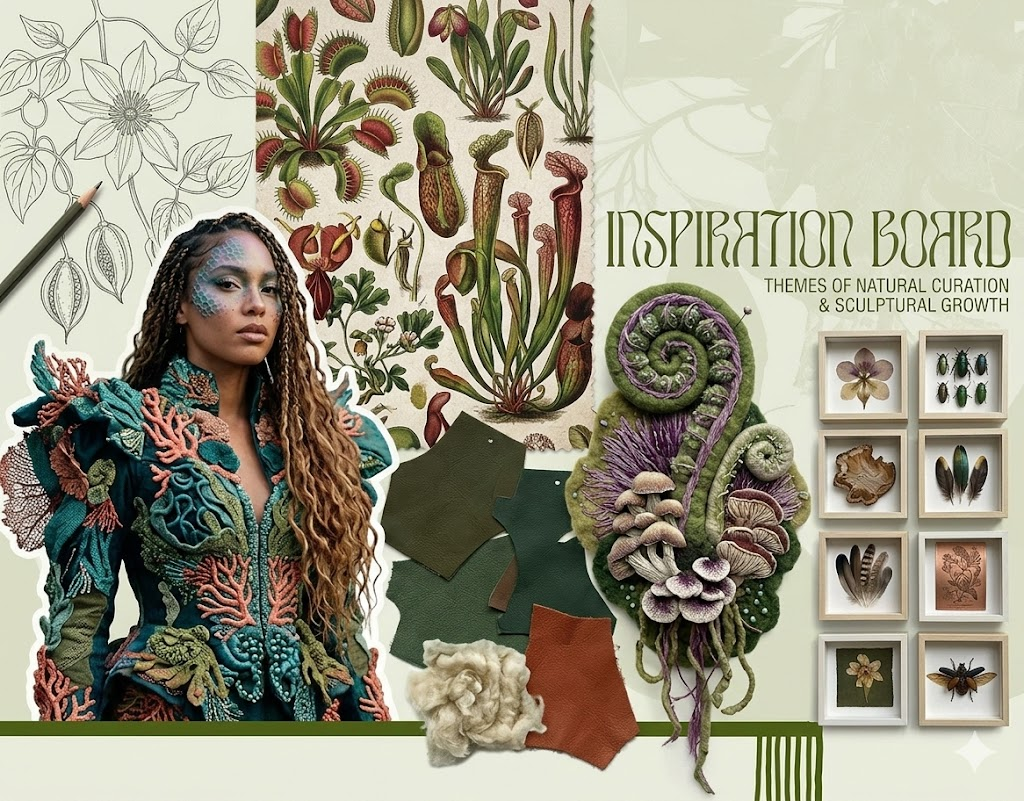
Not a mood board. Every micro-trend surfaces as a scored cluster of visual atoms with a saleability call, a lifecycle read, and the runway and social signal behind it.
Macro Gorpcore Still climbing — strong continuing trend.
Macro Bohemian Revival Established and accelerating.
Macro Blokecore At peak — expect cool-off.
Micro Washed Denim Utility Foundational mass-market staple.
Trends don't appear. They evolve, split and merge — and the lineage is the read.
Buy / hold / avoid and assortment-gap calls.
Ranks each shopper against the live trend graph.
Briefs campaigns off clusters before they peak.
Retrieves on aesthetic intent, not just keywords.
Commercial intelligence in plain language. The engine reads your catalog, your competitors', and the live trend graph — and hands back a brief the merchandiser can sign off in a meeting.
In linen dresses, what micro-trend opportunities are we missing, based on competitor assortment gaps?
The biggest whitespace in linen dresses is around versatile summer day silhouettes — midi lengths, sleeveless shapes, and waist-defined constructions show the largest competitor lead. The strongest SKU gaps are functional day-dress shapes, then silhouette and neckline refinements where competitors still offer deeper choice. 8 opportunity themes identified; largest gap is 62 SKUs in linen midi day dresses.
Global trend graphs are a starting point, not an answer. Hopit resolves the world model at city and cohort level — so a merchandiser in Delhi and a merchandiser in New York get different calls off the same schema.
Delhi · autumn drapes reading against a marigold palette — a signal the global model doesn't see on its own.
Blokecore ascendant among Gen-Z men — sports-glam palette breaking into fast-fashion.
Fusion Indo-western dressing merging with quiet-luxury minimalism — palette shifts toward stone and champagne.
Techwear utility on the rise — sneaker-adjacent, muted tones, high add-to-bag from the Gen-Z DTC cohort.
Every product, every cluster, every cohort resolves against a city-specific view of the world model. Wedding season in Chennai, festival demand in Dhaka, prom pull in Chicago — the merchandiser sees the read they can actually act on.
The world model gives us a running start. Every custom system we ship — planning co-pilots, forecast APIs, size-and-fit models, returns-risk scoring — inherits it. You get months of head-start over a from-scratch build.
MODA · World models · Embeddings · NER · Causal trend lineage · Generation
Four product lines are live with paying customers today — not a roadmap. Advanced scoping conversations underway with a handful of the industry's largest marketplaces and content platforms.
Catalog intelligence and merchandiser-facing trend and commercial intelligence across the assortment.
Trend lineage, commercial intelligence and enriched catalog feeding the merch team.
Catalog intelligence and discovery across a fast-moving apparel assortment.
Catalog intelligence and search enrichment tuned for a D2C apparel marketplace.
Visual similarity, street-style matching and catalogue de-duplication. Measured on LookBench, our 203M model places above a closed commercial system and a 1.24B-parameter model. These are our most downloaded models.
| Model | Params | Fine R@1 | Best for |
|---|---|---|---|
| MODA-SigLIP-Distilled | 203M | 67.63 | Best overall quality |
| MODA-Matryoshka | 203M | 67.42 @256d | 3× smaller index, no measurable loss |
| MODA-Vision-FP16 | 93M vision | — | Edge and mobile (186 MB) |
| GR-Pro (closed) | n/a | 67.38 | reference |
| Tianmu-MERE | 1.24B | 65.99 | reference, re-run in our harness |
Our models are measured in public — full corpus, one harness, competitors included, losses shown. We publish the experiments that failed, too. Consider it vendor diligence we already did for you.
| Surface | Result | Measured against |
|---|---|---|
| Image search (LookBench) | #1 open · 67.63 | above a 1.24B model |
| Text search (10 cells) | rank 1–2 on 9 | SigLIP-SO400M 878M, ZooClaw |
| Under 250M class | leads 5 of 6 | catalog and caption suites |
Take what's already running, or have us build the specific system your problem needs. Either way, you're on the same infrastructure — the difference is how much gets built for you.
Commercial, Catalog or Agentic Search — configured onto your stack, not built from scratch.
A bespoke system for a problem the shelf doesn't solve — built by our Forward-Deployed Engineers, in your codebase.
The question every retailer should ask an AI vendor — answered before you ask it.
We respond personally to every inquiry. Book a call and we will bring specific examples from your category, along with a proposed pilot shape.